

Rethinking Survival
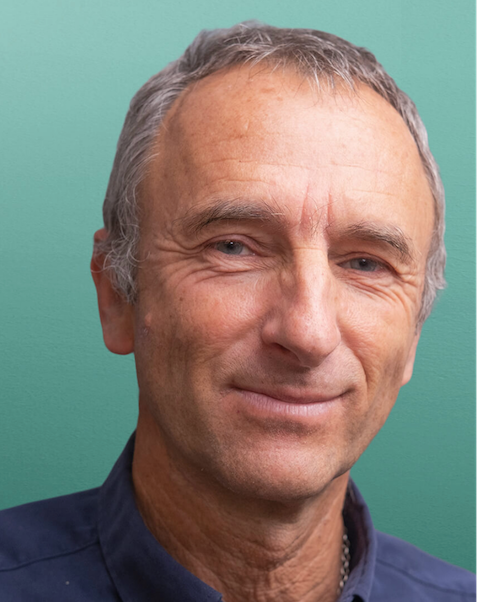
Our next episode of the With Compassion podcast features longtime friend of the Charter for Compassion, Julian Abel of the United Kingdom.
Dr. Abel has been instrumental in helping inspire and shape several Charter initiatives, including our monthly Kitchen Chat gatherings—global conversations that bring together people from every dimension of healthcare, from physicians and nurses to caregivers, therapists, public health advocates, and policy leaders. These gatherings explore not only healthcare systems, but the human relationships and social connections that make healing and well-being possible.
Internationally recognized as one of the founders of the modern Compassionate Communities movement, Julian originally emerged from the field of palliative care, where he began asking a profound question: What if care for one another was not primarily a medical responsibility, but a community responsibility? His work helped redefine palliative care by emphasizing that dying, grief, caregiving, loneliness, and emotional support are social experiences that belong not only in hospitals and clinics, but within neighborhoods, friendships, schools, workplaces, and communities themselves.
In his groundbreaking work on Compassionate Communities, Dr. Abel argues that health and well-being are deeply connected to social relationships, kindness, reciprocity, and belonging. He challenges the increasingly isolated and institutionalized approach to care, suggesting instead that communities flourish when people are empowered to care for one another naturally and relationally. His work consistently demonstrates that strong social networks improve health outcomes, reduce suffering, and strengthen resilience.
This philosophy naturally extends into Julian’s current work around TLC (Talk, Listen, Connect)—a deceptively simple yet deeply transformative practice that encourages people to rediscover the human capacity for listening, empathy, trust, and authentic connection. Through conversation and compassionate presence, TLC helps people move beyond fear, polarization, and isolation toward genuine community.
Central to Julian’s message is also a reexamination of Charles Darwin’s original observations about evolution and survival. Contrary to the popularized phrase “survival of the fittest,” Darwin repeatedly emphasized cooperation, empathy, and social bonds as essential to human survival and flourishing. Dr. Abel’s work helps set the story straight: kindness and compassion are not sentimental ideals or signs of weakness—they are among humanity’s greatest evolutionary strengths.
This promises to be a rich and timely conversation exploring healthcare, democracy, belonging, human connection, and the profound role compassion must play in building a more life-sustaining future. The podcast will be released on June 11.
What Abel is really proposing, moving care back out of the clinic and into the neighbourhood, carries a quieter risk than indifference, and it is worth naming precisely because the movement is working.
Medicine is very good at recognising the absence of these things once they turn clinical: loneliness as a risk factor, isolation as a determinant, grief as a burden. But by the time relationship is named in that language, it has already been translated into an intervention, something that arrives after the crisis becomes legible, not the bond that quietly held the person before it.
So the danger to Compassionate Communities is not that the institution ignores it. It is that the institution will admire it. Success invites adoption: the kitchen table becomes a referral pathway, TLC becomes a billable module, the neighbour becomes a “community asset” in a care plan. And the moment care has to be documented to count, the native form begins to die into a service.
Perhaps the task is not to make compassion more medical. It is to protect the forms of care a system can neither author nor measure, long enough that being noticed does not become the same as being absorbed.